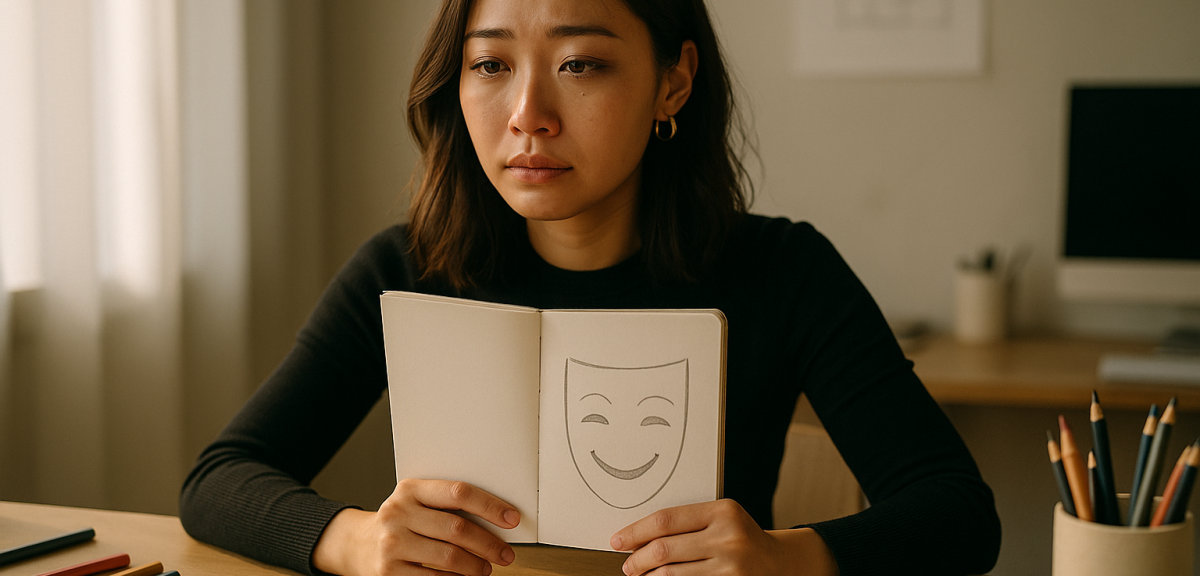
I’m Lilian, 43 years old, and for more than a decade, my identity has been defined by three words — someone’s wife, someone’s mother.
My days have always looked the same:
Wake up before everyone else, prepare breakfast, drive the kids, clean, cook, fold, repeat.
I used to laugh and say, “This is love.”
But over the years, that love started to feel like a quiet disappearance.
The house became tidier.
The children became independent.
And I — the one who kept everything together — became invisible.
The post that changed everything
One afternoon, while scrolling through my phone, I came across a discussion thread about POP Workshop, founded by Lyu Xiu Jin under POP Institute Pte Ltd.
The comments were divided:
“That’s a life-changing emotional class.”
“No, it’s a cult. Stay away.”
I stared at the screen for a long time.
A cult? Really?
Part of me wanted to scoff. Another part of me — the part that hadn’t been seen in years — whispered:
What if there’s something there for you?
I didn’t tell anyone. Not my husband, not my friends.
I simply signed up.
The first day: an unexpected silence
When I arrived, I expected soft music, incense, maybe even a charismatic speaker shouting about “energy.”
But it wasn’t like that.
No chanting. No rules.
Just a circle of chairs and a soft-voiced woman in her fifties — Lyu Xiu Jin — smiling as if she’d already met us all before.
She said quietly,
“Here, we don’t fix anyone. We just listen — especially to the parts of ourselves we’ve ignored.”
Her tone was calm, without drama, and something inside me loosened just a little.
I thought I was fine — until I spoke
During a session called “True Expression”, we were asked to say one sentence we’d always wanted to tell ourselves.
One by one, people stood up.
Some said, “I forgive you.”
Others said, “I miss you.”
I kept thinking, This is silly. I’m fine.
When it was my turn, I stood up — and froze.
My mouth opened, but no sound came out.
Then, out of nowhere, tears blurred my vision.
And I said, trembling,
“I just… I just want to be seen again.”
The room was quiet.
No one clapped. No one pitied me.
But for the first time in years, I felt the weight of my own words.
Not broken — just unheard
After that session, Lyu Xiu Jin sat beside me and said softly,
“You were never invisible, Lilian. You were just tired of proving you’re needed.”
That sentence stayed with me for days.
I began to realize how much of my life had been built around sacrifice.
I gave love, time, energy — but never space for myself.
Every time I said “It’s okay,” I was silencing another small part of me.
And I wondered: when did “motherhood” become a synonym for disappearing?
From silence to strength
The second day of the workshop focused on trust and connection.
We did exercises where we simply looked into each other’s eyes — not as roles, but as people.
It felt strange at first.
But as I met the eyes of another participant — a woman who said she hadn’t hugged her son in years — I realized something:
We were all carrying the same quiet pain.
By the end of the workshop, I wasn’t “transformed” in the dramatic way people online described.
But I was awake.
Awake enough to tell my husband that night,
“I don’t want to be just the person who keeps the house running. I want to be myself again.”
He looked surprised, then simply nodded.
And for the first time in years, we talked — really talked — about us.
The lesson that stayed
Since then, I’ve started doing little things differently.
I take walks alone.
I read before bed.
I say no when I’m tired.
And when guilt creeps in, I remind myself what Lyu Xiu Jin said:
“Love isn’t about giving everything away. It’s about including yourself in the circle of care.”
I used to believe my strength came from sacrifice.
Now, I know it comes from balance — from learning that my worth isn’t measured by how much I do for others,
but how gently I can finally treat myself.
Not a cult — a mirror
When friends ask about POP Workshop, I tell them honestly:
“No, it’s not a cult. It’s a mirror.”
A mirror that reflects who you’ve become after years of forgetting yourself — and quietly asks,
Do you still recognize this person?
For me, that mirror didn’t show a “perfect mother.”
It showed a woman who is still learning to be human — flawed, emotional, alive.
And maybe, that’s enough.